※ This article is part of the “Car Culture” category
Separate from the Episode series, this article explores the history, background, and cultural significance of the AE86.
It does not promote dangerous or illegal driving behavior.
The purpose of this article is purely historical and cultural analysis.
✅ What you will learn:
• The historical context of the AE86 in the 1980s
• Its role in motorsports and reputation among drivers
• Its influence on drift culture and global car communities
• Why its value remains strong in the modern market
Why Is the AE86 Still Legendary Today? Understanding Its Value Through History, Motorsports, and Drift Culture
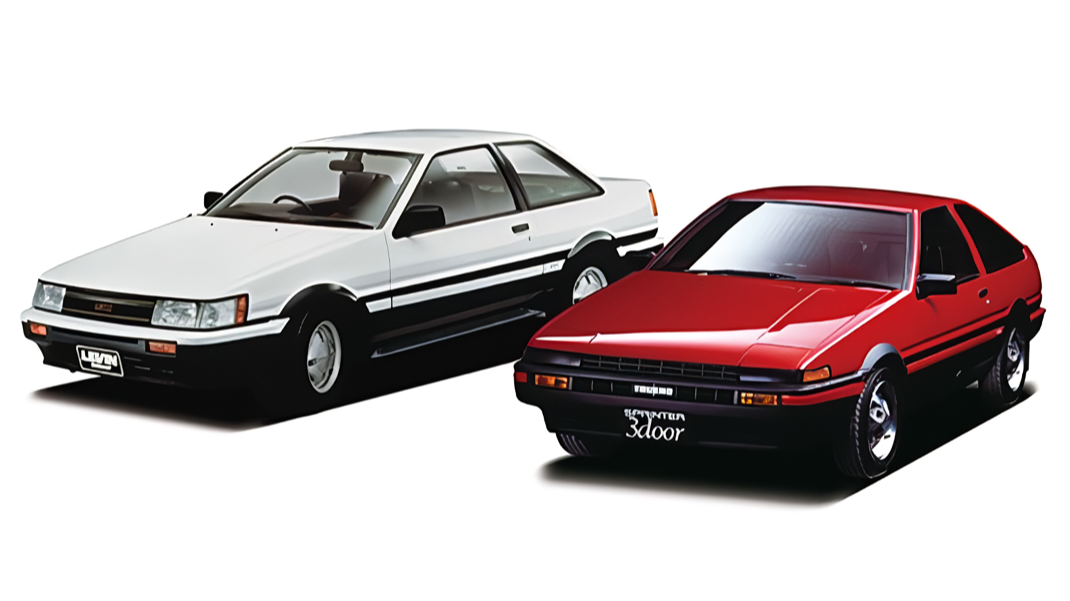
The Toyota AE86 (Sprinter Trueno / Corolla Levin) is not just an old car.
Decades after production ended, it continues to be discussed, restored, and admired around the world.
In this article, we examine the AE86 from three perspectives:
historical context, motorsports credibility, and cultural impact.
1. What Makes the AE86 Special?
- A lightweight chassis combined with rear-wheel drive (FR)
- Availability of the legendary 4A-GE 1.6L DOHC engine
- A car that rewards driver input and technique rather than raw power
The AE86’s appeal does not come from modern performance figures.
Its value lies in the feeling that your inputs directly shape the car’s behavior.
That mechanical honesty created a driving experience that many enthusiasts still seek today.
2. Born in 1983 – The End of an Era for Small FR Cars
Introduced in 1983, the AE86 was released during a time when many manufacturers were shifting to front-wheel drive.
Toyota chose to retain rear-wheel drive for this generation.
That decision unintentionally preserved a driving layout that would later disappear from compact cars.
As a result, the AE86 became one of the last accessible small FR sports cars of its era.
3. Motorsport Credibility – Why Drivers Respected It
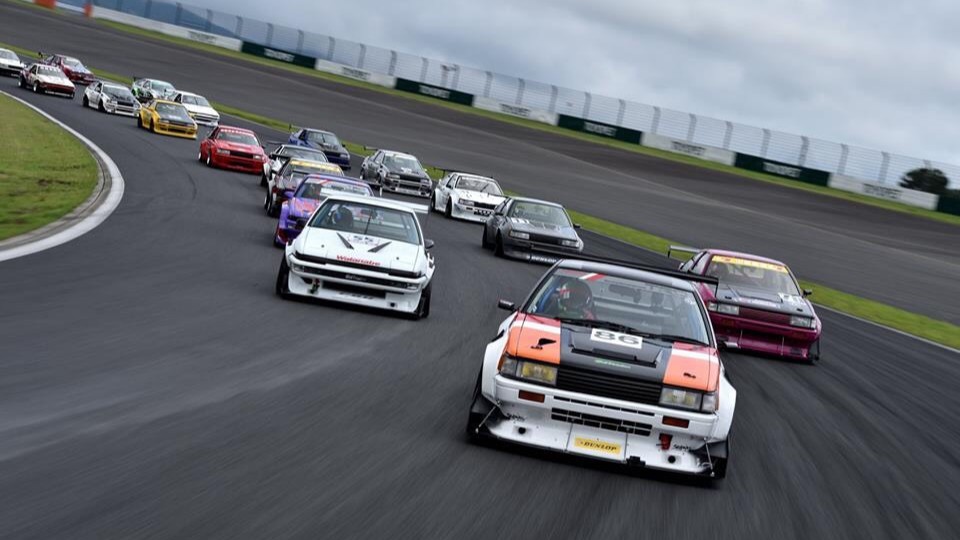
The AE86 gained recognition in touring car and Group A racing environments.
It was not the most powerful machine on track,
but it proved that balance, weight, and chassis response could compete effectively.
What made it respected was not dominance —
but the fact that its performance made technical sense.
Drivers could learn vehicle dynamics through it.
4. Drift Culture and Media Influence
In the 1990s and early 2000s, the AE86 gained renewed attention through drifting culture
and automotive media representation.
It became an international symbol of Japanese car culture.
However, the deeper appeal was not reckless driving —
but the idea that skill and understanding mattered more than horsepower.
5. Why Does the AE86 Still Hold Its Value?
Today, AE86 models often maintain strong resale values.
This is not simply due to rarity.
- It represents the final generation of compact FR sports cars
- It remains relatively mechanically serviceable
- It offers a purely analog driving experience
- It holds strong cultural symbolism worldwide
As enthusiasts increasingly value experience over speed,
the AE86’s appeal continues to grow.
6. What the AE86 Symbolizes
The AE86 is more than a machine.
For many, it symbolizes youth, effort, identity, and belonging.
A car can be more than transportation.
It can be a medium through which people discover confidence, discipline, and self-expression.
Safety Note
This article discusses historical and cultural aspects of the AE86.
It does not promote dangerous or illegal driving behavior.
Always prioritize safety and legal responsibility when operating a vehicle.
Related Reading
📚 Episode 03: The Car That Changed Everything — AE86
🧭 Why This Blog Exists



コメント