While the main episodes focus on lived experiences,
this Special Episode is written to explore
the history, background, and cultural significance of the AE86 itself.
It is intended as a supplementary article to deepen the understanding of the main story.
Special Episode: The History of the AE86 — From Its Birth to the End of an Era
Among all Japanese cars, few have captured hearts like the Toyota Sprinter Trueno and Corolla Levin — better known as the AE86.
It wasn’t just a car.
It was a feeling — a connection between man and machine that still echoes around the world.
Chapter 1: The Beginning — 1983, The Age of Driver’s Cars
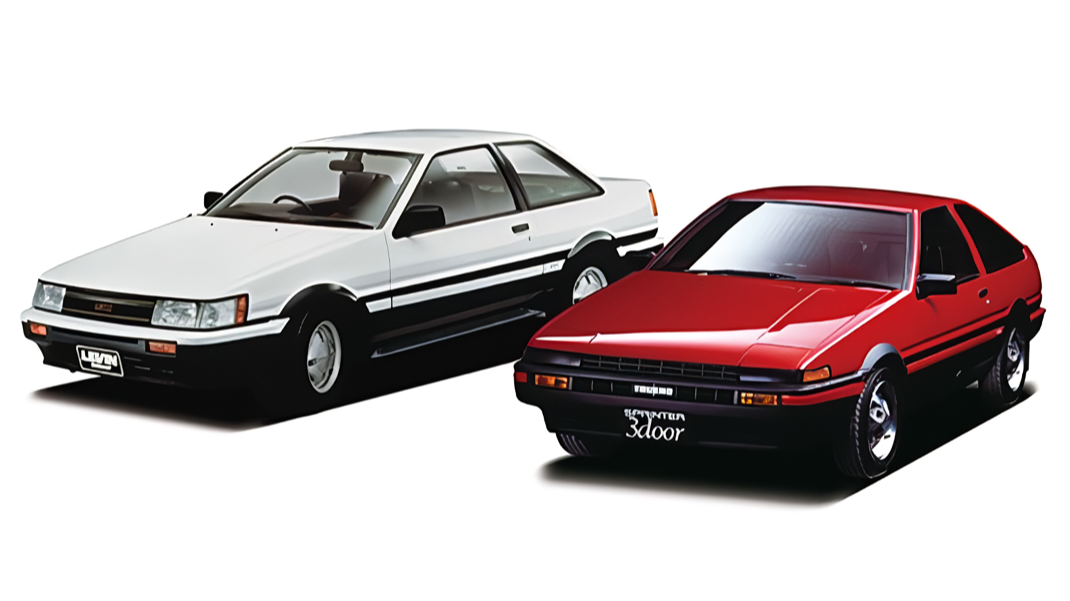
In 1983, Toyota introduced two compact sports coupes: the Corolla Levin and the Sprinter Trueno.
Unlike most competitors shifting to front-wheel drive, these cars proudly retained their
rear-wheel-drive (FR) layout —
a rare choice that defined their character and philosophy.
Powered by the legendary 4A-GE 1.6L DOHC 16-valve engine,
the AE86 paired a lightweight body with sharp mechanical response,
rewarding driver input rather than raw power.
Chapter 2: The Legend — Motorsports and Drift Culture
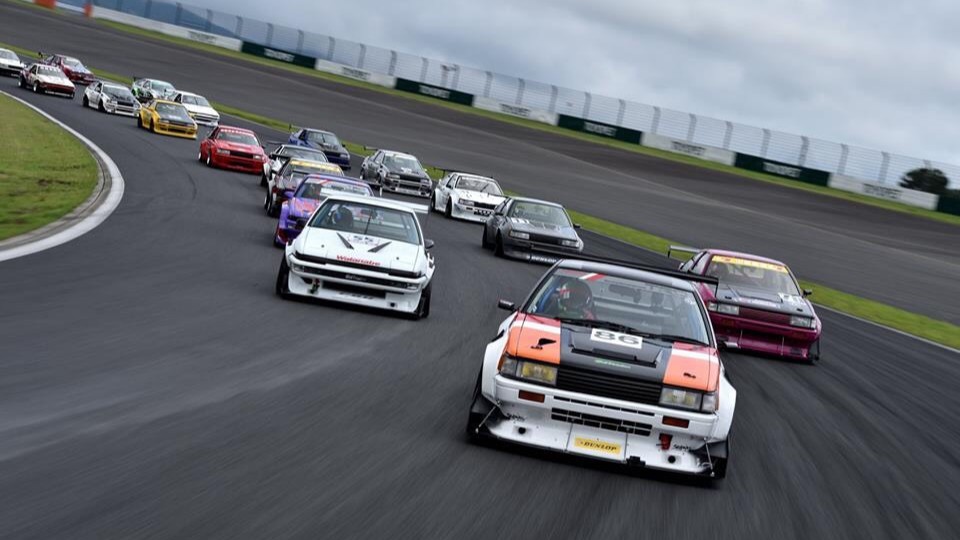
The AE86 proved itself not only on public roads, but also in motorsports.
It achieved success in Group A and Japan’s touring car championships,
earning a reputation for balance and control.
Its global fame expanded through the iconic manga Initial D.
The humble “Tofu Delivery AE86” inspired a generation of car enthusiasts
and helped introduce drifting culture to the world.
It was never about horsepower —
it was about rhythm, feel, and the joy of driving.
Chapter 3: The End — 1987 and Beyond
In 1987, Toyota ended production of the rear-wheel-drive Corolla and Sprinter,
transitioning the next generation (AE92) to front-wheel drive.
An era ended — and a legend quietly began.
Throughout the 1990s and 2000s, enthusiasts rediscovered the AE86’s balance,
feedback, and mechanical honesty.
Today, “AE86” is no longer just a chassis code — it is a symbol.
Final Chapter: Why We Still Love the AE86
The AE86 was never about being the fastest.
It was about feeling connected.
A car that turns driving into something deeply human —
almost like a reflection of living itself.
Even in an age of automation and electronic control,
the AE86 reminds us what driving truly means:
to drive, and to dream.


コメント